❓ Is He A Student? — Questions & Greetings
Today you will learn to ask Yes/No questions and questions with a question word using "be", the punctuation rules that make your writing clear, and how to greet people at any time of day!
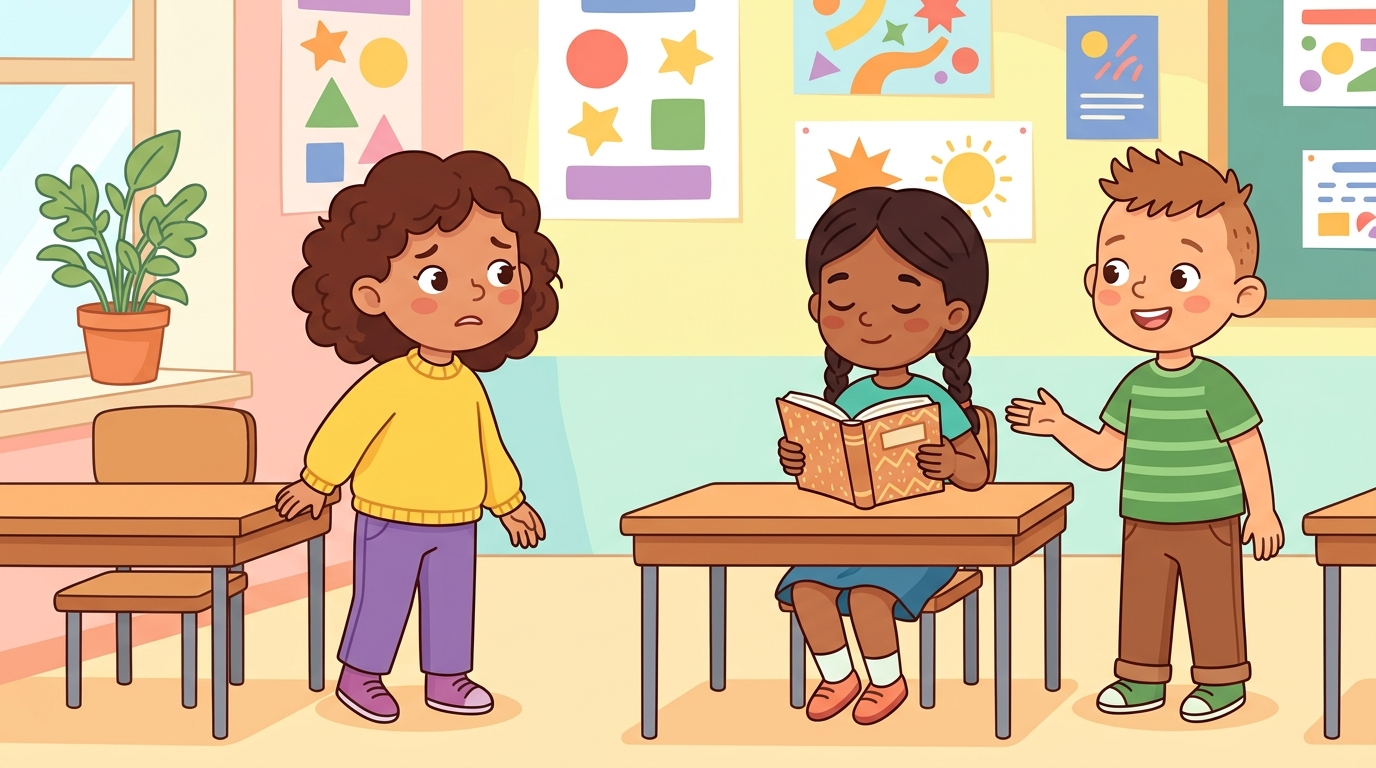
Nora Meets A New Classmate
Read the little scene below.
🤔 Can you turn "She is a student." into a question? Let's find out together!
❓ Yes/No Questions With "Be"
To make a Yes/No question with "be", move the verb to the front of the sentence, and remember to add a question mark!
🎮 Try It Yourself — Flip The Card!
Click the button to turn each statement into a question, and hear it out loud.
💬 Short Answers
We usually answer a Yes/No question with a short answer, not just "yes" or "no" alone.
Is he a student?
"Yes, he is."
Is she new?
"No, she isn't."
Is it your number?
"No, it's not."
Are they busy?
"Yes, they are."
Are they OK?
"No, they aren't."
🔤 Questions With A Question Word
Some questions begin with a question word, like what or how. Notice the question word comes first, then the verb "be".
What's your name?
Asks for a person's name.
How are you?
Asks how someone feels today.
What's your phone number?
Asks for someone's phone number.
What's your last name?
Asks for a person's family name.
✏️ Punctuation & Capitalization
Small marks make a big difference! Here's what each one does.
Capital Letter
For a person's name and the start of a sentence: "My name is Nora."
Period
At the end of a sentence: "They are students."
Question Mark
At the end of a question: "What's your name?"
Apostrophe
To make a contraction: "They aren't busy."
🕐 Everyday Greetings
The greeting you use changes with the time of day! Click a time below to find out which one to use.
A Little Conversation
Asking & Answering
- "How are you?" — "I'm fine, thanks. And you?"
- "I'm good."
Saying Goodbye
- "Have a nice day!" — "You too!"
- "Good night!" (in the evening, before bed)
Listen And Repeat!
Click 🔊 Listen to hear the phrase, 🐢 Slowly to hear it slower, then 🎙️ My turn and say it out loud into your microphone!
✍️ Practice Time!
Exercise 1 — True Or False?
Exercise 2 — Complete The Dialogue
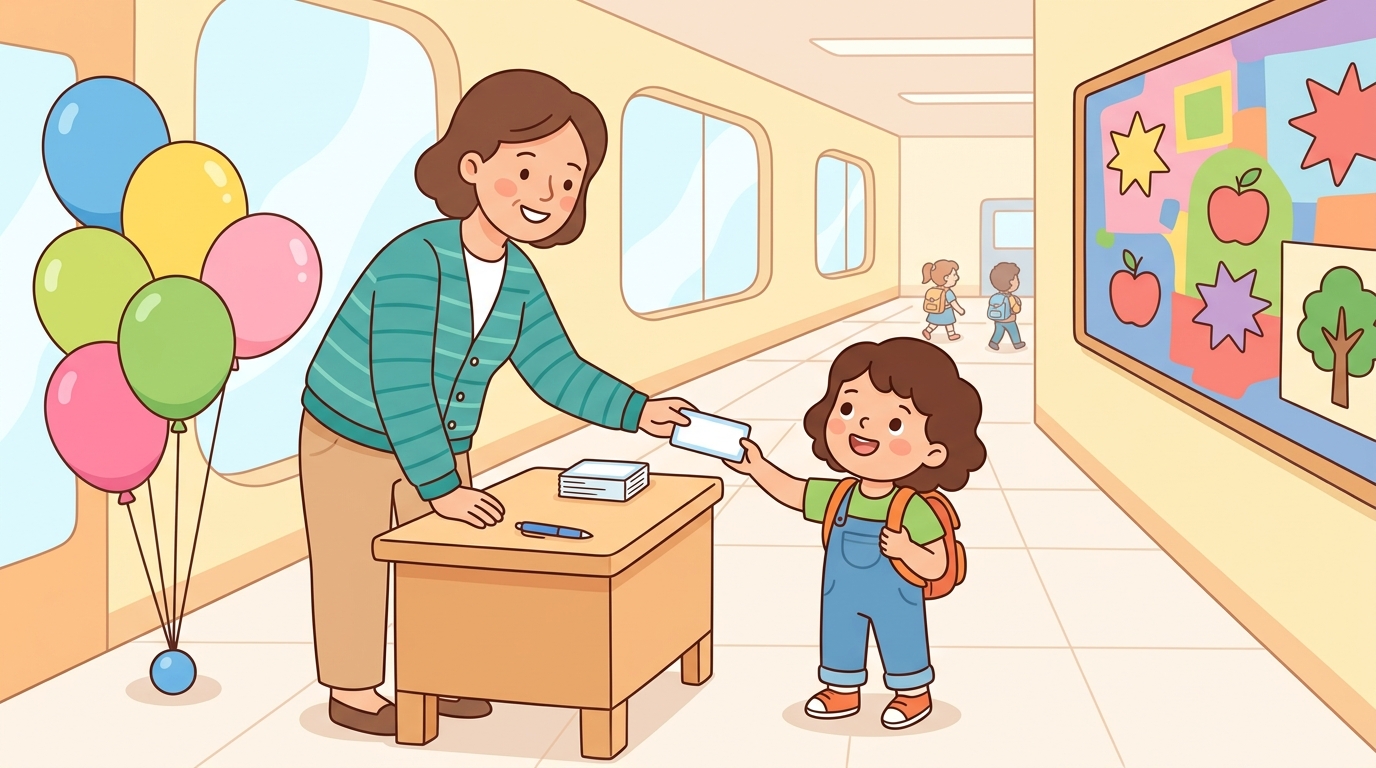
Fill in the missing word in each line of the conversation at the school welcome desk.
🎭 Create & Record Your Own Dialogue
Imagine you're at a school welcome desk. Write a short dialogue: ask Yes/No questions, questions with a question word, and greet each other properly!
🎙️ Now, Record It!
Act out your dialogue out loud (alone with both voices, or with a friend) and record yourselves. Then listen back!
🎯 Final Quiz — Is He A Student? — Questions & Greetings
Answer 7 questions to test everything you learned in this lesson!