👨👩👧👦 This Is My Family! — Family & The Simple Present
Today you will hear the difference between "thirteen" and "thirty", name the people in your family, use the simple present (he plays, she doesn't play), and say what you have with "have", "has" and "any".
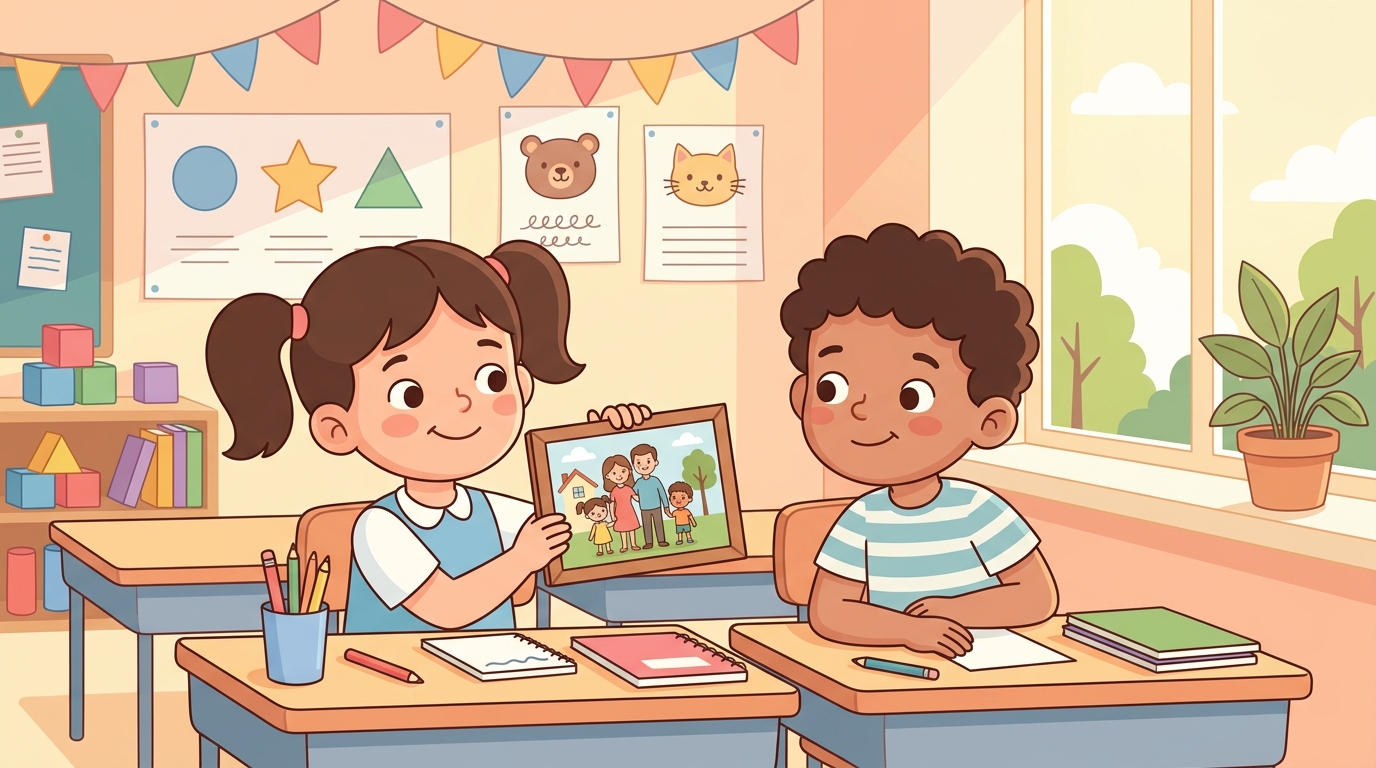
Nora Shows A Family Photo
Read the little scene below.
🤔 How many people are there in your family?
🔢 Thirteen Or Thirty? — Teen Or Ty?
Some English numbers sound very similar: the -teen numbers (13 to 19) and the -ty numbers (30, 40... 90). Listen to the stress — the strong part of the word.
-teen → Stress At The End
- thir-teen (13)
- eigh-teen (18)
-ty → Stress At The Start
- thir-ty (30)
- eigh-ty (80)
👂 Listen To Each Pair
Click a number to hear it. Can you hear where the strong part is?
👪 My Family — Family Words
Click a card to hear the word.
Family
familleMother
mèreFather
pèreSister
sœurBrother
frèreGrandmother
grand-mèreGrandfather
grand-pèreAunt
tanteUncle
oncleWife
épouseHusband
épouxOnly Child
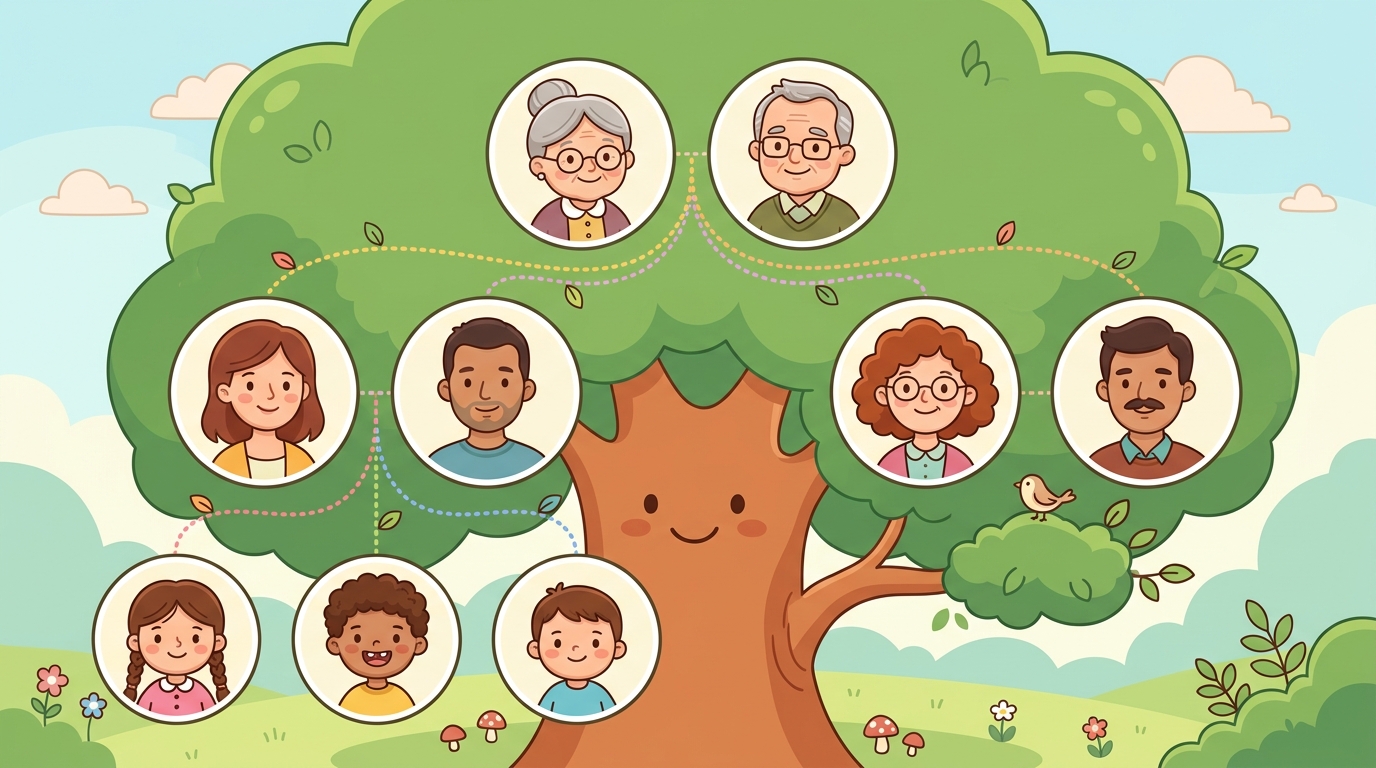
enfant uniqueAn only child has no brothers and no sisters. Your mother's sister is your aunt, and your father's brother is your uncle.
⏱️ The Simple Present — Facts & Habits
Use the simple present for facts ("My aunt lives in Sousse.") and habits ("I play soccer every Sunday."). After he, she and it, add -s to the verb.
✅ Statements
- I / You / We / They come from Tunisia.
- He / She / It comes from Tunisia.
- "Mia dances."
❌ Negatives
- I / You / We / They don't (do not) come from Italy.
- He / She / It doesn't (does not) come from Italy.
- "Leo doesn't dance."
After doesn't, the main verb does not change: "She doesn't play." ✅ — never "She doesn't plays." ❌. When we speak, we almost always say don't and doesn't, not "do not" and "does not".
🔀 Verb Switcher
Pick a person, an action, and ✅ or ❌ — watch the verb change, and listen!
🤲 Have, Has & Any
"Have" is an irregular verb: after he, she and it, say has (not "haves"). In negatives, we usually add the word any.
✅ Have / Has
- "I have one brother."
- "She has two sisters."
❌ Don't / Doesn't Have Any
- "I don't have any sisters."
- "He doesn't have any brothers."
With doesn't, go back to have: "She doesn't have any brothers." ✅ — never "She doesn't has..." ❌.
🧮 Family Maker
Choose who is talking and how many brothers and sisters — I'll make the sentence for you!
Listen And Repeat!
Click 🔊 Listen to hear the phrase, 🐢 Slowly to hear it slower, then 🎙️ My turn and say it out loud into your microphone!
✍️ Practice Time!
Exercise 1 — True Or False?
Exercise 2 — Complete The Dialogue
Fill in the missing word in each line of the conversation.
🎭 Create & Record: Present Your Family
Imagine you are showing a family photo to a friend. Write a short dialogue: who is in your family, what they do, and what you have (or don't have).
🎙️ Now, Record It!
Act out your dialogue out loud (alone with both voices, or with a friend) and record yourselves. Then listen back!
🎯 Final Quiz — This Is My Family!
Answer 7 questions to test everything you learned in this lesson!